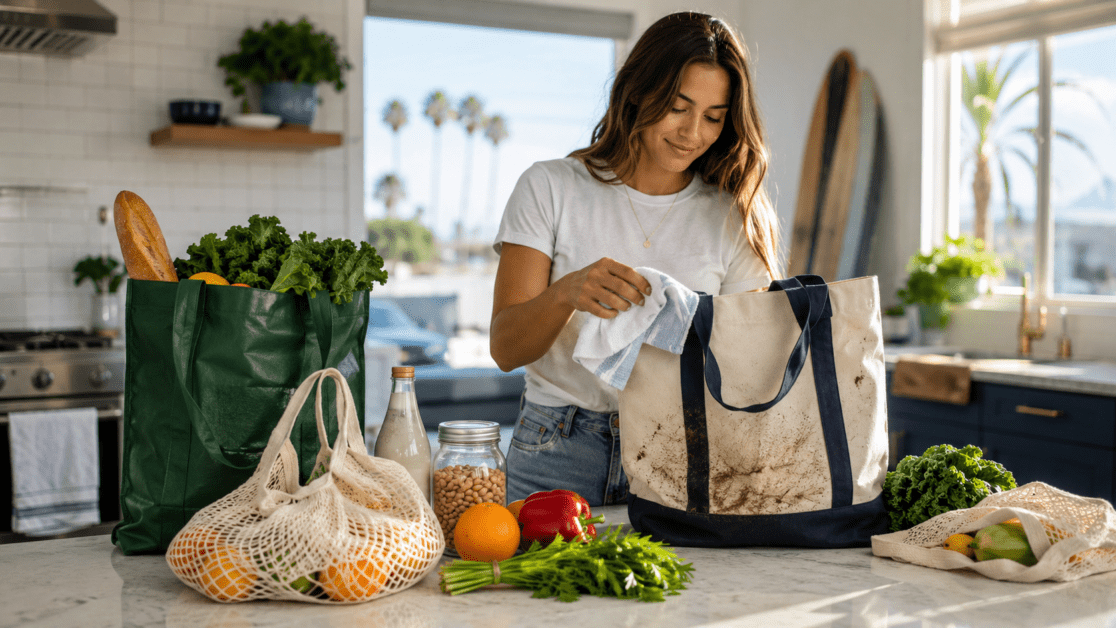
Reusable grocery bags are convenient, environmentally friendly, and easy to keep in the trunk for an unexpected store visit. They are also one of the most commonly overlooked items in a household cleaning routine.
A reusable bag may carry raw meat one day, fresh produce the next, and clothing or household supplies later in the week. It may be placed inside a shopping cart, on a parking lot surface, in the trunk, and then directly onto the kitchen counter.
Despite all of that contact, many reusable bags are rarely washed.
The risk is not limited to visible spills. Moisture from refrigerated groceries, small traces of food, and residue from produce can remain inside the bag. When the bag is folded and stored before it dries, bacteria and odor may develop.
Cross-contamination is the main concern. A bag used for raw meat should not later be used for bread, fruit, or ready-to-eat food unless it has been cleaned. One easy solution is assigning different bags to different categories. For example, use one washable bag for meat, another for produce, and separate bags for shelf-stable groceries.
Fabric bags can usually be washed in the washing machine, although the care label should be checked first. Use regular detergent and let the bags dry completely before folding them. Insulated bags may need to be wiped by hand with warm water and dish soap.
Plastic-lined reusable bags should be cleaned inside and outside. Pay attention to seams and the bottom corners, where small leaks and crumbs tend to collect. Avoid storing the bag while it is still damp.
The trunk or storage area where the bags are kept also matters. If the trunk contains dirt, pet hair, sports equipment, or spilled liquids, the exterior of every grocery bag may become contaminated before it reaches the store. Vacuuming the trunk and using a clean container for bags helps keep them separated from everything else.
Another simple rule is keeping reusable grocery bags off food-preparation surfaces. Even a clean-looking bag has been handled and placed in public areas. Put it on the floor, a chair, or a designated unloading surface rather than directly on the kitchen island.
Households we clean for in Long Beach often use reusable bags for farmers markets, beach outings, picnics, and everyday shopping. That makes them useful, but it also means they may carry sand, sunscreen, moisture, and food residue from several different activities.
A basic reusable-bag routine includes:
- Washing fabric bags after leaks or raw-food use
- Wiping insulated bags after each grocery trip
- Allowing all bags to dry before storage
- Separating raw meat from ready-to-eat foods
- Keeping grocery bags away from kitchen counters
- Cleaning the trunk or bag-storage container periodically
Reusable bags are designed to reduce waste, but “reusable” should not mean “never cleaned.” A few minutes of maintenance can prevent odors, protect food, and keep an easily forgotten household item from spreading dirt around your kitchen.