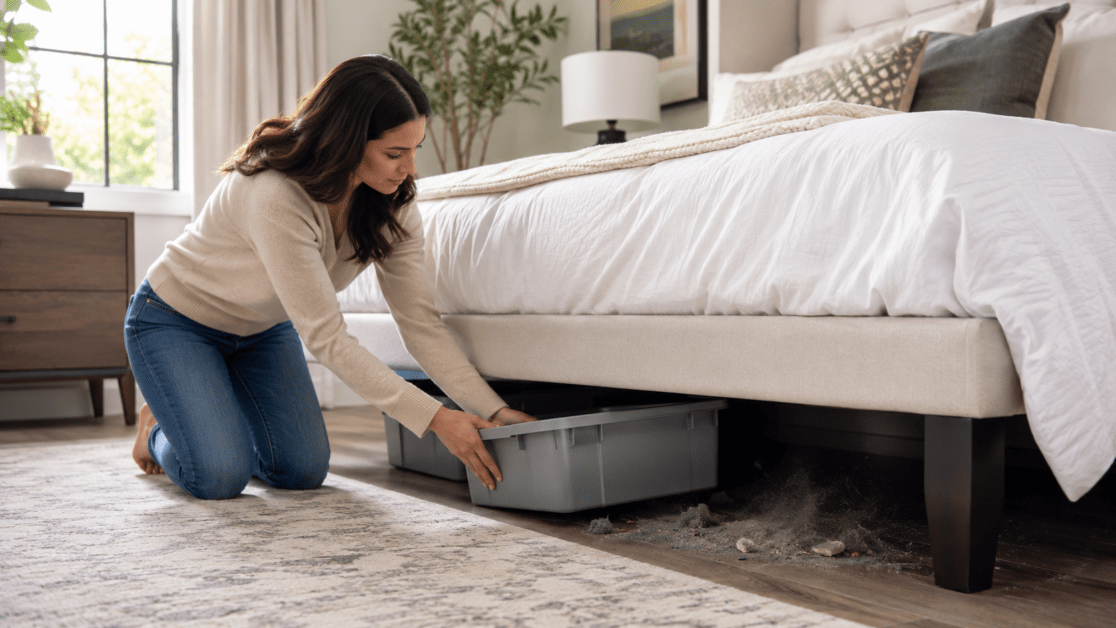
The area under the bed is easy to ignore. It is dark, inconvenient to reach, and usually hidden by a bed frame, bedding, or storage containers. But because it receives very little attention, it can become one of the largest dust-collection zones in the bedroom.
Dust does not simply sit on visible furniture. It settles wherever air movement carries it, including beneath beds. Hair, fabric fibers, pet dander, skin cells, tissue fragments, and small pieces of debris gradually accumulate there.
Every time someone walks through the room, changes the bedding, or turns on a fan, part of that buildup can return to the air. For people with allergies, a dusty area directly beneath the place where they sleep may contribute to nighttime congestion, sneezing, or morning irritation.
Storage can make the problem worse. Boxes and loose items create more edges where dust can collect. Cardboard also absorbs odor and can attract certain pests if it remains undisturbed for long periods.
That does not mean the space must remain empty. Under-bed storage can be useful, especially in Encino homes or apartments where closet space is limited. The key is using closed, wipeable containers rather than open boxes or loose piles.
Before cleaning under the bed, remove everything stored there. Sort the items before putting them back. Anything forgotten for years probably does not need to occupy valuable storage space.
Use a vacuum with an extension wand or flat attachment to reach as far beneath the frame as possible. Move the bed if it can be done safely, but do not risk damaging the floor or injuring yourself. Long-handled microfiber dusters can help loosen debris in corners that the vacuum cannot initially reach.
Hard floors should be vacuumed before they are damp-mopped. Mopping first can turn fine dust into a gray film that spreads rather than disappears. Carpeted rooms may require several slow vacuum passes, especially along the wall and beneath the head of the bed.
The bed frame itself deserves attention too. Dust the slats, legs, headboard edges, and lower frame. If the bed has an upholstered headboard, vacuum it with a fabric attachment.
A practical schedule is to clean beneath the bed every one to three months, depending on pets, allergies, flooring, and how quickly dust accumulates. Bedrooms with open windows or ceiling fans may need attention more frequently.
This hidden zone also provides clues about the rest of the room. If you find an unusually heavy layer of dust, it may indicate that bedding, curtains, ceiling fans, or HVAC vents need more frequent cleaning.
A bedroom can look spotless while a large amount of dust remains only inches beneath the mattress. Cleaning under the bed may not be the most visible chore, but it can help the entire room feel fresher and reduce the amount of debris that repeatedly returns to the air.