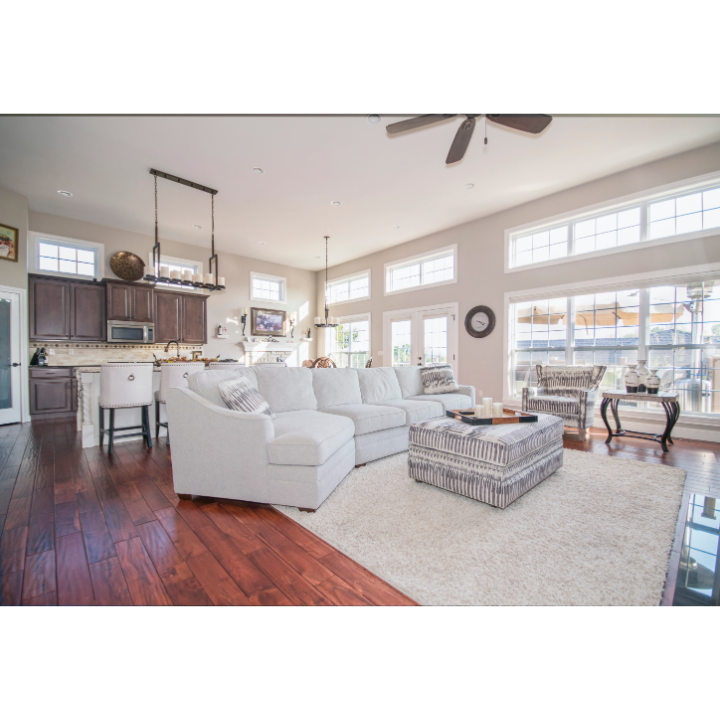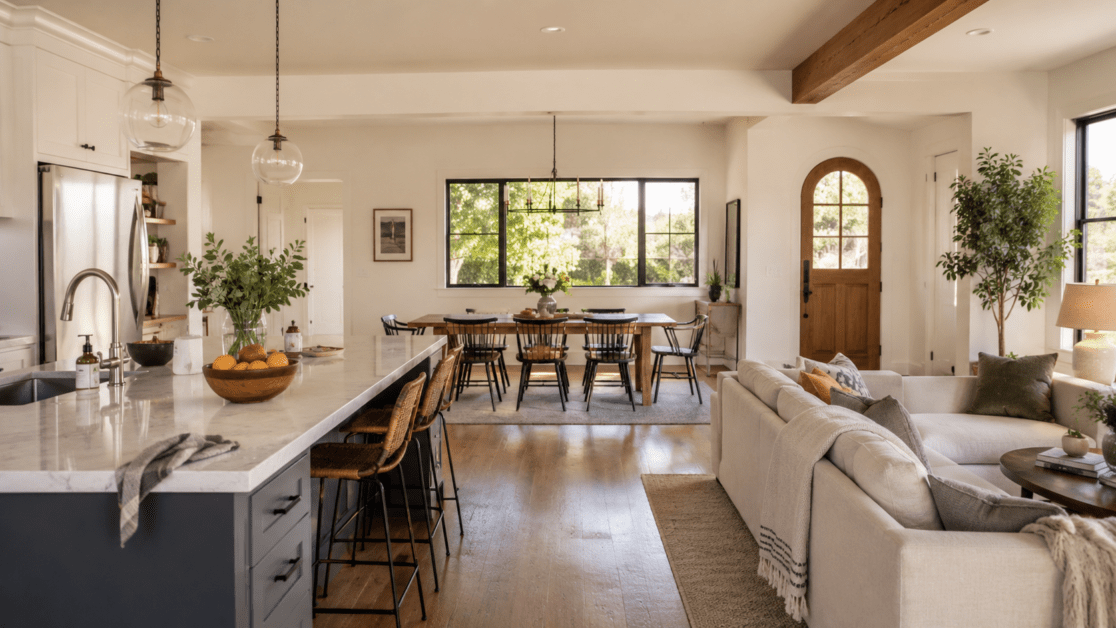
Open floor plans are one of the most popular home layouts for a reason. They look bright, airy, and modern. They make entertaining easier, let natural light travel further, and create that spacious feeling people love. But there is one downside that homeowners notice quickly once real life sets in: open floor plans seem to get messy faster than more traditional, closed-off homes.
If you live in Pasadena and feel like your main living area always looks “a little off” even when you have cleaned recently, the layout itself may be part of the reason. Open floor plans do not necessarily get dirtier in absolute terms, but they make clutter, crumbs, dishes, and daily life much more visible. That changes how the entire home feels.
One of the biggest reasons open floor plans feel messier is that there are fewer visual boundaries. In a closed kitchen, dishes in the sink can stay out of sight while you relax in the living room. In an open-plan home, the kitchen mess becomes part of the living room atmosphere. The same thing happens with mail on the dining table, snacks left on the coffee table, or a jacket draped over a chair. Each small item affects the entire visual field because all the spaces are connected.
Pasadena homes, especially those with updated interiors or remodeled family spaces, often blend the kitchen, dining room, and living room into one central zone. That makes the area highly functional but also more demanding from a cleaning perspective. A little clutter in one corner no longer stays in that corner mentally. It changes the mood of the whole downstairs.
Another reason open floor plans feel harder to maintain is that they create stronger traffic patterns. Everyone tends to move through the same few routes repeatedly: from the front door to the kitchen island, from the kitchen to the couch, from the dining table to the patio. Those routes collect more dust, more crumbs, and more random objects than you might expect. Because there are fewer walls, the mess spreads more visually and physically.
This is why open-plan homes often benefit from zoning, even if there are no doors dividing the rooms. A kitchen can still have a kitchen reset routine. A dining area can still have a strict rule about what belongs on the table. A living room can still have a nightly surface clear. The physical layout may be open, but the maintenance routine should not be.
One of the best ways to stay ahead of the mess is to identify your main sightline. Stand where you usually enter the home and look toward the central living space. What do you see first? In many Pasadena homes, it is the kitchen island or the dining table. That surface should become one of your highest priorities because if it stays clear, the whole space feels calmer.
Counter discipline matters a lot in open layouts. The kitchen island especially can become a magnet for everything—mail, backpacks, chargers, grocery bags, half-used water bottles, and more. Once that island is cluttered, the whole home starts to look busy. The easiest fix is to treat it as a reset surface. It should return to mostly clear at the end of each day.
Floors need extra attention too. In a closed floor plan, a dusty kitchen floor may not affect how your living room feels. In an open layout, dirty floors in one area make the entire connected space seem less clean. Frequent vacuuming or sweeping in the main pathways often does more to improve the feel of an open-plan home than detailed cleaning in less-used corners.
The dining area also deserves protection from becoming overflow storage. Open homes often lack enough “in-between” spaces, so the dining table becomes a natural drop zone. But once it fills with random objects, papers, and shopping bags, the central room loses its visual balance. Keeping that one surface mostly open has a huge effect on how orderly the whole space feels.
If you have children, pets, or work-from-home routines layered into the same open zone, the need for systems becomes even more important. Baskets, bins, hidden storage, and fast evening resets become the real tools that protect the layout from looking constantly overwhelmed.
Open floor plans are not harder because they are flawed. They are harder because they are honest. They show everything. That means they reward consistent small resets much more than occasional big house cleanings in Pasadena. If you build habits around the main sightlines, key surfaces, and high-traffic floors, your open layout can still feel calm, beautiful, and easy to live in.