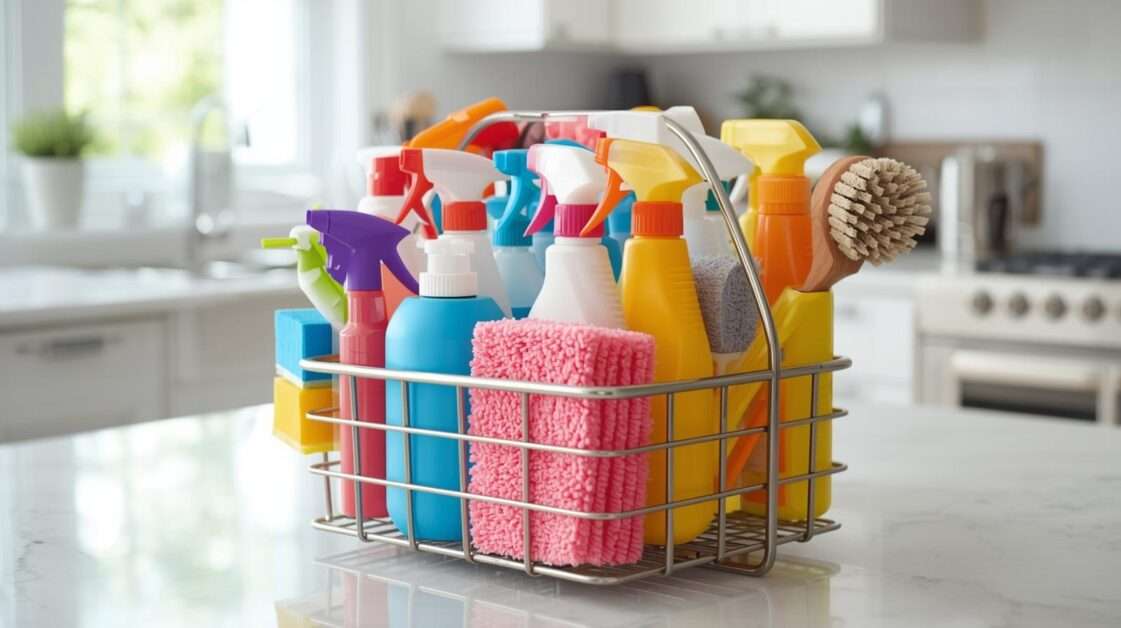
Open any well-run household or professional kit and you’ll notice the same thing: tools are easy to reach, the liquids don’t leak, and nothing rattles around. That’s not an accident. A good cleaning caddy is less about the brand and more about how it’s set up. When everything has a reliable place, you move faster, make fewer trips, and finish with less mental fatigue.
This guide breaks down how to build a smart, ergonomic caddy for a Culver City home, what to put in it (and what to skip), and how to adapt the contents for kitchens, bathrooms, and living areas without overstuffing. Think of it like a chef’s mise en place for cleaning: set it up once, and the work becomes lighter every week.
Pick the right container first
Material and shape decide whether your caddy helps you or fights you.
Compact bucket with center handle
Great for apartments and smaller homes. Choose a rigid plastic with a flat bottom and two or three compartments. It should fit on the back of a toilet, inside a cabinet, and on a narrow counter without tipping.
Open-tote organizer
If your home is multi-story or 1,500+ square feet, a wider tote with low walls lets you see everything at a glance. Look for molded bottle wells, not just open space, so spray heads don’t knock over as you walk.
Shoulder-strap soft tote
Useful if you’re carrying tools up and down stairs or through tight townhome corridors. Make sure the base is stiff, washable, and water resistant.
What to avoid
Tall, skinny bins that hide labels, totes with black interiors that make it hard to see small tools, and anything with a round bottom that slides on counters.
Quick fit check
Load your intended bottles, lift the caddy, then stop suddenly. If anything tips or clanks hard, rethink the layout or pick a caddy with molded dividers.
Stock only the high-yield essentials
Pros don’t carry a store aisle. They carry a handful of products that cover 90 percent of tasks.
All-purpose cleaner
Choose a concentrate you can dilute for counters, doors, and baseboards. Clear liquids are less likely to stain fabrics if drips happen.
Bathroom descaler
A mild acid cleaner for mineral buildup on glass, faucets, and tile. Keep it in a different color bottle to avoid confusion.
Degreaser
Especially helpful for Culver City kitchens where cooking aerosols drift onto cabinet faces. A citrus or alkaline formula cuts film fast.
Glass and stainless spray
For mirrors, shower glass, and appliances. A fine mist head prevents drips.
Disinfectant for high-touch points
An EPA-listed spray or wipes for switch plates, handles, and remotes. Reserve it for targeted use rather than whole-room spraying.
Microfiber cloth stack
Carry three to five in different colors: glass/mirrors, kitchen, bath, and a dark one for baseboards and dust. Fold each into quarters so you always have a clean face.
Detail brush and grout brush
A soft bristle for faucet bases and crevices; a stiff, narrow brush for grout lines and shower corners.
Scraper and melamine sponge
A plastic scraper for stuck food or soap film, and a melamine pad for scuffs. Use the pad lightly on paint to prevent dulling.
Small scrub pad and non-scratch sponge
For sinks, tubs, and stubborn spots that a cloth won’t lift.
Gloves and a mini trash sleeve
Nitrile gloves protect skin; a roll of small liners or a folded grocery bag tucked along the side lets you remove collected debris room by room.
Optional but nice
A collapsible feather duster for vents and frames, a 12-ounce spray bottle with distilled water for streak-free buffing, and a pocket-size squeegee for shower glass.
Layout: where each item should live
Put the heaviest bottles in the corners to stabilize the caddy. Place frequently used sprayers facing out so your hand can find them without looking. Tuck cloths vertically in a narrow slot rather than stacked; they dry faster and you can pull one without disturbing the rest. Slide the scraper into a side channel and cap the brushes in a small mesh sleeve so damp bristles don’t touch cloths.
A simple rule that speeds you up: liquids on one side, dry tools on the other, detail tools centered. Your hands learn the pattern and stop searching.
Build room-specific add-ons without overpacking
Instead of building three separate caddies, keep one core kit and swap a thin add-on pouch for each zone.
Kitchen pouch
Stovetop scraper, degreaser, stainless spray, a long bottle brush for reusable water bottles, and a narrow cloth reserved for microwave interiors. If you have lots of fingerprints on black stainless, add a microfiber specifically for that finish.
Bathroom pouch
Descaler, non-scratch sponge, grout brush, squeegee, and a dedicated glass cloth. If your water is hard, keep a small travel-size vinegar to pre-treat glass and chrome.
Living and bedroom pouch
Furniture polish if needed, a soft dusting mitt, and a lint roller for lampshades and upholstery arms.
These thin pouches drop into the tote front slot or ride alongside the core kit, so you never juggle duplicate bottles.
Culver City considerations: water and surfaces
Local water can leave mineral spots on glass and dark fixtures if not dried quickly. A microfiber towel reserved for final buffing prevents those halos on matte black faucets and shower glass. Many homes mix painted walls with mid-century wood pieces; keep a gentle, silicone-free furniture product if you polish occasionally, but don’t store it next to acids or degreasers.
For apartments and townhomes with shared stairwells, keep the caddy footprint tight to avoid bumping walls. If your building has elevator access, a rolling utility bin can carry the caddy plus a compact vacuum in one trip.
The five-move cleaning loop that pairs with a good caddy
A great kit is only half the speed. The other half is your sequence. Use the same five moves in every room:
Declutter surfaces into a temporary catch bin
Dust high to low, including frames and vents
Clean and disinfect high-touch points
Wet clean sinks, counters, and spots that need chemistry
Floors last, then return the room’s items from the catch bin
Because your caddy mirrors this loop, your hands always find the next tool without thinking.
Mistakes that slow people down
Too many products
If two bottles do the same job, remove one. Decision fatigue is real.
No color coding
Assign colors to tasks and stick with them. Cross-contamination drops and you stop sniffing bottles to guess what’s inside.
Leaky trigger heads
Replace cheap sprayers with commercial heads. A puddle in the caddy ruins cloths and wastes time.
Hidden rags
If you bury cloths at the bottom, you’ll keep reusing the same damp one. Vertical storage fixes this instantly.
One caddy per floor, not per person
In multi-story homes, park a second empty caddy upstairs and restock it after laundry day. Lugging a single kit up and down stairs discourages midweek touch-ups.
Maintain the kit like a tool, not a junk drawer
Weekly
Rinse sprayer tips in warm water, wash cloths by color, and wipe the caddy interior dry. Top off concentrates and check brushes for bent bristles.
Monthly
Check labels, refresh any faded marker text, and replace melamine sponges. If the tote smells like chemicals, wash it with dish soap and air dry.
Seasonally
Audit the kit: remove anything you didn’t touch in 90 days. Add what your home demanded most. In Culver City summers, a small fan brush for window tracks might earn a spot. In cooler, damp spells, keep that squeegee handy.
A sample packing list you can copy today
Core bottles
All-purpose cleaner, bathroom descaler, degreaser, glass/stainless spray, quick disinfectant.
Tools
Four microfiber cloths (glass, kitchen, bath, dark utility), detail brush, grout brush, non-scratch sponge, scrub pad, melamine sponge, plastic scraper, mini squeegee, gloves, small trash liners.
Add-ons
Kitchen pouch (scraper, bottle brush, stainless spray), bathroom pouch (descaler, grout brush, squeegee), living pouch (dust mitt, lint roller).
Container
Rigid plastic tote with bottle wells and a narrow cloth bay; or a compact open tote that fits under a sink.
Weight goal
Aim to keep the full caddy under 10 pounds. If it’s heavier, you’ll avoid using it and the system fails.
When to consider professional help
A well-built caddy helps you maintain, but it can’t reset a home that’s fallen behind or a bathroom with mineral buildup that needs machine polishing. That’s where a scheduled deep clean makes sense. After a full reset, your weekly caddy loop keeps everything at baseline with far less effort. In Culver City, many households settle into a rhythm of a quarterly deep clean with light weekly maintenance using a single, well-designed caddy.
The payoff
When your tools ride in the same place, your brain stops working so hard. You move through rooms without backtracking, finish faster, and the house stays calmer between larger cleans. Build one reliable kit, add slim pouches per zone, and let the system carry some of the load.