If you’ve ever vacuumed your floors only to see new footprints an hour later, you’ve probably wondered:
Would banning shoes indoors actually make a noticeable difference?
Short answer: yes — a big one.
Long answer: it’s effective… but not always convenient, and sometimes socially awkward especially in American households.
Let’s break it down honestly.
What Shoes Bring Into Your Home (Whether You See It or Not)
Every time someone walks inside wearing outdoor shoes, they’re tracking in more than visible dirt.
Shoes commonly carry:
Dust, sand, and fine grit (which slowly scratches floors)
Pollen and allergens
Bacteria from sidewalks, parking lots, and public restrooms
Lawn chemicals and fertilizers
Oils and asphalt residue
Even when shoes look clean, the soles act like tiny brooms — sweeping whatever’s outside straight onto your floors and carpets.
Over time, this adds up to:
Faster buildup of grime
Dingier carpets
Floors that lose shine more quickly
More frequent mopping and vacuuming
A no-shoe policy doesn’t just reduce dirt — it slows the entire rate at which your home gets dirty.
That’s huge.
The Real Benefit: Less Cleaning, Not Zero Cleaning
Let’s be clear: going shoe-free won’t magically eliminate cleaning.
But it does mean:
Floors stay clean longer
Entryways stop becoming dirt magnets
Dust levels drop
Mopping frequency often gets cut in half
Rugs last longer before needing deep cleaning
In practical terms, many households notice:
30–50% less visible floor dirt after adopting a consistent no-shoe rule.
That’s not scientific — it’s real-world experience from thousands of homes.
The Tradeoff Nobody Talks About: Convenience
Here’s where theory meets reality.
A strict no-shoe policy sounds great… until you’re:
Running outside to grab the mail
Taking the trash out
Walking the dog for 2 minutes
Carrying groceries in multiple trips
Suddenly you’re constantly:
Slipping shoes on
Taking them off
Repeating the cycle
It gets old fast.
Many people end up creating a “gray zone” — barefoot inside, but slipping shoes on for quick outdoor errands. That helps, but it also weakens consistency.
Then There’s the Social Part (AKA Becoming the Shoe Police)
In many cultures, removing shoes indoors is automatic.
In much of America?
Not so much.
Enforcing a no-shoe policy can mean:
Reminding guests (awkward)
Watching someone walk halfway inside before stopping them (more awkward)
Offering socks or slippers
Explaining your rule over and over
Some homeowners jokingly refer to themselves as becoming the “shoe nazi.”
You don’t want to be that person — but if you care about cleanliness, you often end up there.
And yes, some guests will feel uncomfortable or surprised. That’s just reality.
A More Practical Middle Ground
If full enforcement feels like too much, here’s a realistic compromise that works well:
1. Shoes Off for Daily Living
Household members go barefoot or wear indoor slippers.
2. Quick Trips = Easy Slip-Ons
Keep flip-flops or slides by the door for mail, trash, or fast errands.
3. Guests Get a Gentle Cue
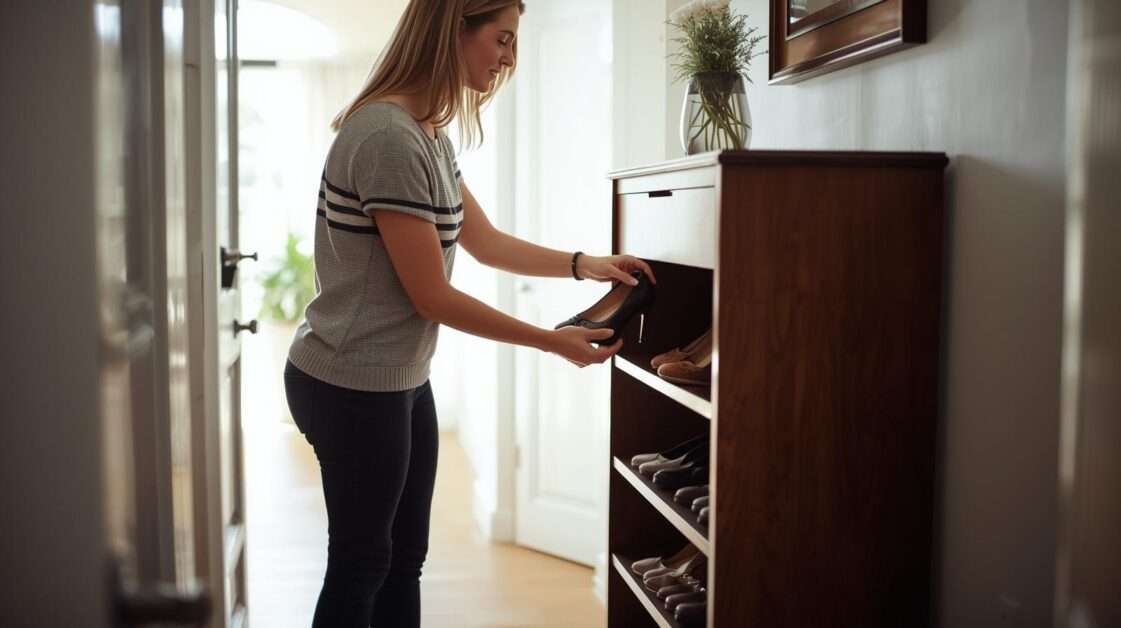
A visible shoe rack + casual “we usually take shoes off” goes a long way.
4. Focus on Entryway Defense
Use heavy-duty mats inside and outside the door to trap debris before it spreads.
This approach captures most of the cleanliness benefits without turning your home into a footwear checkpoint. If you’re enforcing a no-shoe policy at your home or if your floors have zero restrictions, Marching Maids provides cleaning services in LA to help you keep your house as clean as possible.
So… Is It Worth It?
If your goals are:
Cleaner floors
Less frequent mopping
Longer-lasting carpets
Reduced allergens
A generally fresher home
Then yes — a no-shoe (or mostly no-shoe) policy absolutely works.
Just know what you’re signing up for:
✔ Cleaner home
✖ Minor daily inconvenience
✖ Occasional social awkwardness
For many households, the tradeoff is worth it.