Home gym equipment collects more than visible sweat. Handles, mats, benches, screens, resistance bands, and weight surfaces accumulate body oils, dust, bacteria, and cleaning-product residue.
Because gym equipment is expensive and made from many different materials, cleaning everything with the same disinfectant can cause damage. Rubber may dry out, vinyl can crack, metal may corrode, and touchscreen coatings can become cloudy.
The safest approach is to match the cleaning method to the surface.
Workout mats should be cleaned after heavy use and allowed to dry completely before being rolled up. A mild soap-and-water solution is generally safer than strong chemicals, although the manufacturer’s instructions should be checked.
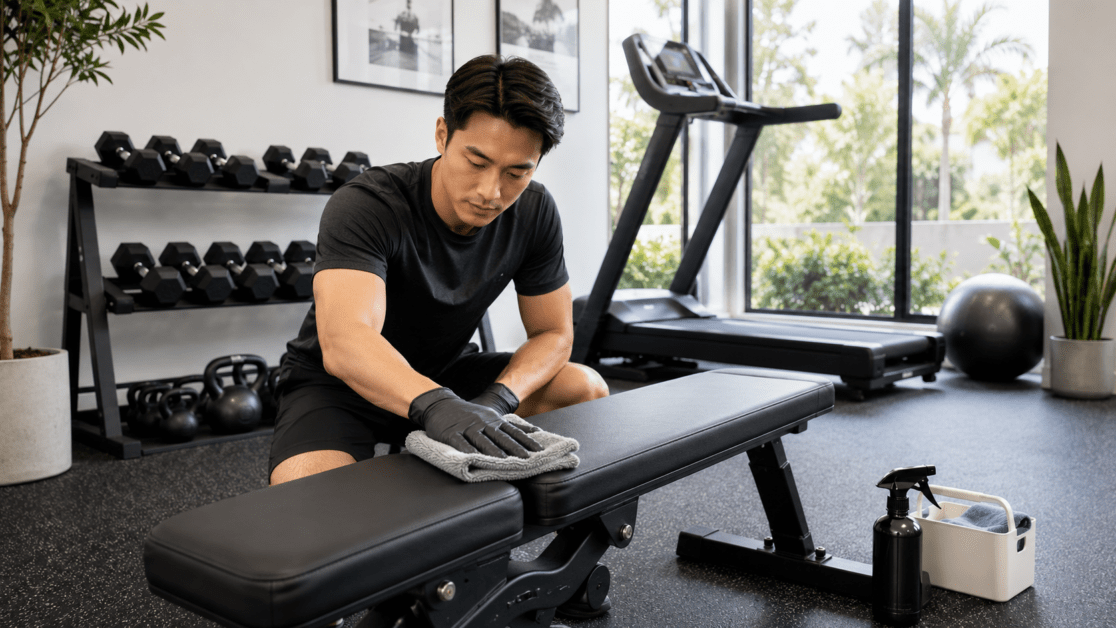
Benches and padded equipment usually have vinyl or synthetic upholstery. Wipe them with a soft cloth and a mild cleaner. Avoid saturating seams because moisture can reach the padding underneath.
Dumbbells and metal weights should be wiped dry after cleaning. Sweat left on metal can contribute to corrosion, especially around textured handles and joints. Rubber-coated weights should not be treated repeatedly with harsh alcohol or bleach solutions that may cause the coating to dry or crack.
Cardio equipment requires extra care around electronics. Never spray cleaner directly onto a treadmill console, stationary-bike screen, or rowing-machine display. Apply the cleaner to a microfiber cloth first, then wipe carefully.
Treadmill belts collect dust, pet hair, and debris from shoes. Vacuum around and beneath the machine regularly. Follow the manufacturer’s guidance before cleaning or lubricating the belt itself.
Resistance bands should be inspected while they are cleaned. Small cracks, thinning areas, or sticky surfaces may indicate that the band needs replacement. Wash bands gently and store them away from direct sunlight and extreme heat.
Fans and vents on cardio machines also need attention. Dust buildup can restrict airflow and make the motor work harder. Use a vacuum or dry cloth around openings without pushing debris farther inside.
A useful home-gym routine includes wiping high-touch surfaces after each workout, cleaning mats weekly, vacuuming the area regularly, and performing a more detailed equipment check monthly.
The room itself matters as much as the machines. Sweat can reach flooring, walls, mirrors, and nearby furniture. Ventilation helps control odor, while clean flooring reduces the amount of dust transferred onto mats and equipment.
Irvine homeowners who use a garage or spare room as a gym should pay particular attention to dust and temperature changes. Garage gyms often collect more debris than indoor fitness rooms, even when the equipment looks clean from a distance.
A well-maintained home gym is more pleasant to use and easier to keep odor-free. Cleaning it correctly also protects the equipment from unnecessary wear, which may save far more than the cost of a few microfiber cloths and a gentle cleaner.
Want to leave it to the pros? We offer fully customizable cleaning services in Irvine to handle situations just like this.