Ice is supposed to be clean, neutral, and nearly tasteless. When it starts smelling like the freezer, onions, plastic, or something difficult to identify, the problem is usually not the water alone.
Ice absorbs odor easily. An open container of leftovers, an old freezer spill, or food stored without a tight seal can affect the taste and smell of every new batch. The ice maker itself may also contain mineral buildup or residue that needs cleaning.
Start by discarding the existing ice. Old cubes may have absorbed weeks of freezer odor, and keeping them will make it difficult to tell whether cleaning solved the problem.
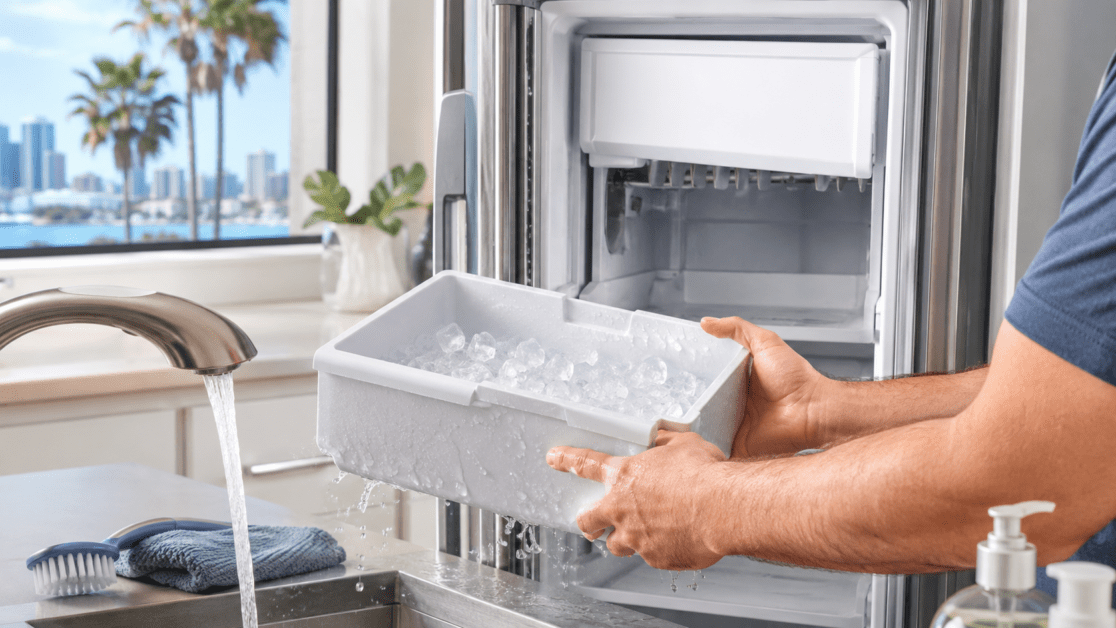
Empty and wash the ice bin with warm water and mild dish soap. Rinse it thoroughly so no soap residue remains, then allow it to dry completely before reinstalling it.
While the bin is removed, inspect the surrounding freezer area. Look for spills, forgotten food, damaged packaging, or ice buildup. Wipe the shelves, walls, and nearby surfaces with a freezer-safe cleaning solution.
The refrigerator’s water filter should also be checked. An old filter may affect the taste and odor of both drinking water and ice. Replace it according to the appliance manufacturer’s schedule rather than waiting until the problem becomes obvious.
Some ice makers have removable trays or accessible components that can be cleaned, while others should only be serviced according to the owner’s manual. Avoid spraying liquid directly into the mechanism.
After cleaning, allow the ice maker to produce one or two new batches and discard them. This helps flush the system before the ice is used again.
Freezer organization can prevent the odor from returning. Store strongly scented foods in airtight containers. Clean spills promptly, and avoid keeping uncovered items near the ice bin.
A small open box of baking soda may help reduce general freezer odor, but it should not be treated as a substitute for cleaning spoiled food or residue.
San Diego households may use ice heavily for water bottles, outdoor gatherings, and warm-weather entertaining. That makes a clean ice maker more important than it may seem. If ice smells unpleasant, guests often notice it immediately even when the rest of the kitchen looks spotless.
The problem is usually manageable. Discard the old ice, clean the bin and freezer, check the water filter, and flush the first new batches. Once the source of the odor is removed, the ice should return to being exactly what it is supposed to be: cold, clean, and forgettable.